
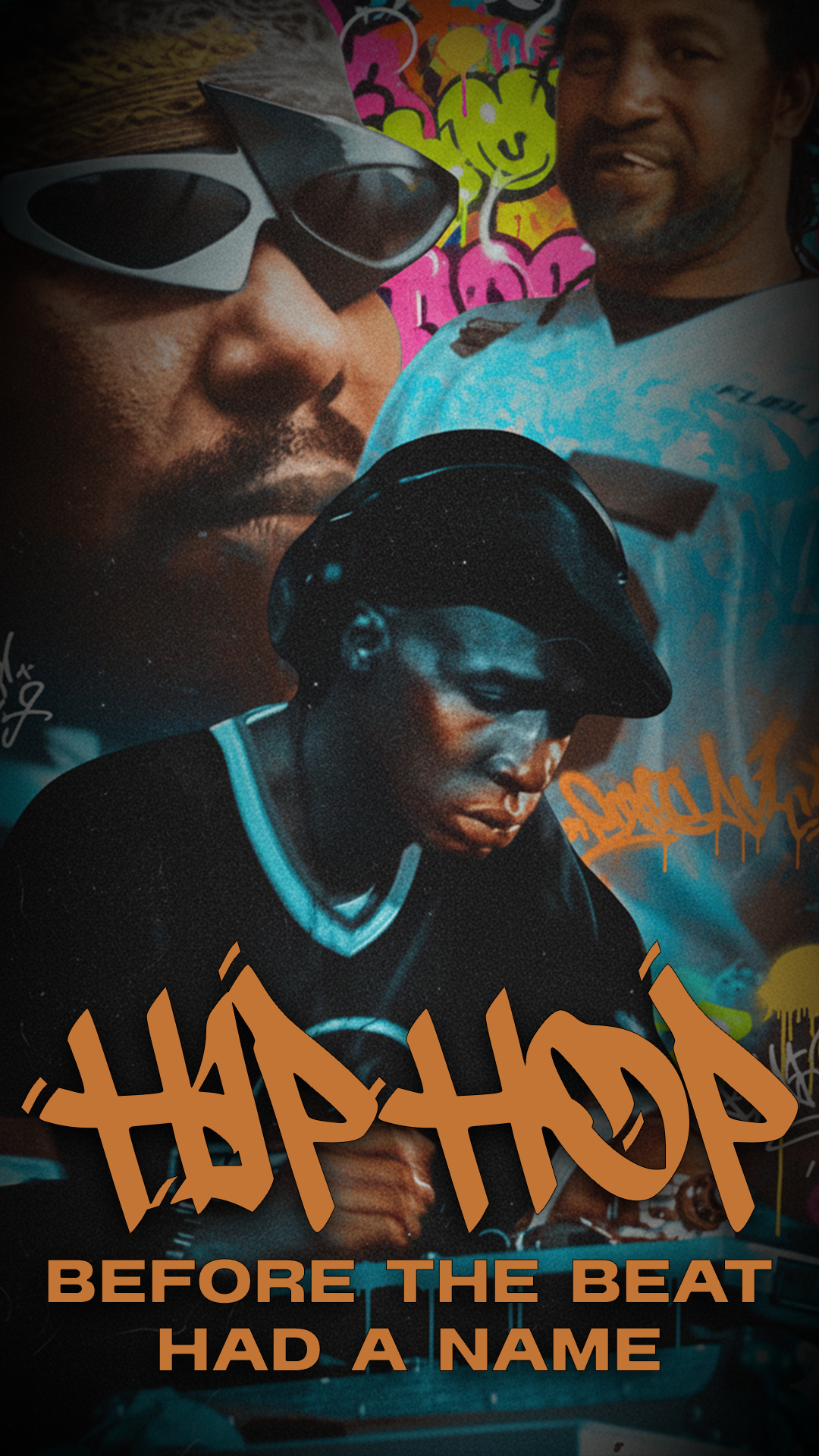
HIP HOP: BEFORE THE BEAT HAD A NAME
By Burt “Time2Killit” Brage
Hip Hop didn’t start as music. It started as movement. Action. Response. It was a strategy for survival in a world that didn’t care if you were seen, heard, or even alive.
The industry likes to pretend Hip Hop was born in a studio, that it was a “genre” meticulously engineered by executives in midtown offices. That’s the lie. The truth is far more visceral. Hip Hop was born in the rubble of a burning borough. It came from people moving because standing still was a death sentence.
GROUND ZERO: AUGUST 11, 1973
The history books give us a date: Saturday, August 11, 1973. The location: 1520 Sedgwick Avenue, The Bronx.
Cindy Campbell threw a back-to-school party in the community room. Her brother, Clive Campbell, better known as DJ Kool Herc, handled the sound. But to understand why that night mattered, you have to understand the environment. The Bronx was a war zone of neglect. The construction of the Cross Bronx Expressway had gutted neighborhoods, displacement was rampant, and “benign neglect” from the city meant buildings were left to burn for insurance money.
In a neighborhood the world had given up on, Herc wasn’t trying to “invent a culture.” He was trying to keep a party alive. He noticed that the crowd didn’t want the whole song; they wanted the “break,” those few seconds where the melody dropped out and the drummer took over.
Herc took two copies of the same record and, using two turntables, extended those seconds into minutes. He called it the “Merry-Go-Round.” That wasn’t a “production technique.” It was a physical response to the energy of a room that needed to stay in motion. It was engineering a heartbeat for a borough that had been left for dead. That was the seed.
THE FOUR ELEMENTS: BORN OF NECESSITY
Before Hip Hop was a product to be sold, it was four distinct expressions happening simultaneously, all fueled by the same desperate need to exist.
1. DJing: The Architect
Herc lit the spark, but the architects built the skyscraper. Afrika Bambaataa emerged from the Bronx River Projects to turn the DJ into a community leader, using the music to redirect gang energy into cultural competition. Then came Grandmaster Flash, who brought the precision of an electrician to the decks, inventing the “Quick Mix Theory” and perfecting the scratch. These weren’t just DJs; they were scientists of the street.
2. MCing: The Street Reporter
Before “rapping” was a career, it was crowd control. The MC, the Master of Ceremonies, was part hype man, part storyteller, and part street reporter. Coke La Rock is cited as the first, but crews like The Furious Five and The Cold Crush Brothers turned it into an art form. They weren’t chasing “bars” for a Spotify playlist; they were riding the DJ’s rhythm to keep the collective spirit of the room from flickering out.
3. Breaking: The Body as a Weapon
Breaking wasn’t “dance” in the traditional sense; it was battle language. It was a way to display power, style, and dominance without pulling a trigger or throwing a punch. When the Rock Steady Crew hit the floor, they weren’t just entertaining; they were claiming territory. Every spin and every “freeze” was a statement of control in a life that often felt uncontrollable.
4. Graffiti: The Visual Claim
Long before “Street Art” was a gallery term, Graffiti was a scream for visibility. Writers like TAKI 183, Phase 2, Lady Pink, and Futura 2000 were kids claiming space in a city that tried to erase them. They “bombed” the trains because the trains traveled from the forgotten boroughs into the heart of the wealthy ones. It was a way of saying, “I exist. You will see my name, even if you refuse to see my face.”
THE FIFTH ELEMENT: KNOWLEDGE
If there is something missing from the modern conversation, it’s the “Fifth Element”: Knowledge of Self. Hip Hop was never just about the beat; it was about the why. It was about understanding your history, your worth, and your power in a system designed to make you feel worthless. Real confidence comes from this fifth element, the internal engine that keeps you “upright on your square” when the external world is in flames.
FROM THE PARK TO THE PLASTIC: 1979–1986
Hip Hop existed for six years as a pure, undocumented street culture before it ever touched vinyl. When The Sugarhill Gang’s “Rapper’s Delight” dropped in 1979, the Bronx pioneers were skeptical. To them, it felt like a watered-down version of the truth.
But the door was open:
- 1982: Grandmaster Flash & The Furious Five released “The Message.” Suddenly, the “party music” became a mirror. “It’s like a jungle sometimes, it makes me wonder how I keep from going under.” * 1983-1984: Run-DMC stripped it back down. No more sequins or fur; they wore what the street wore Lee jeans, leather jackets, and Adidas. They brought the “Runway” to the “Reality.”
- 1986: “Raising Hell” took the culture global.
THE TRUTH IN THE ECHO
When we treat Hip Hop like a mere genre, we erase its soul. It wasn’t born for radio or fame. It was born because people needed a way to feel alive. It was the ultimate “Dichotomy” taking the “nothing” the world gave them and turning it into “everything” the world now mimics.
Hip Hop didn’t start on a beat. It started on a feeling. And that feeling was Confidence.