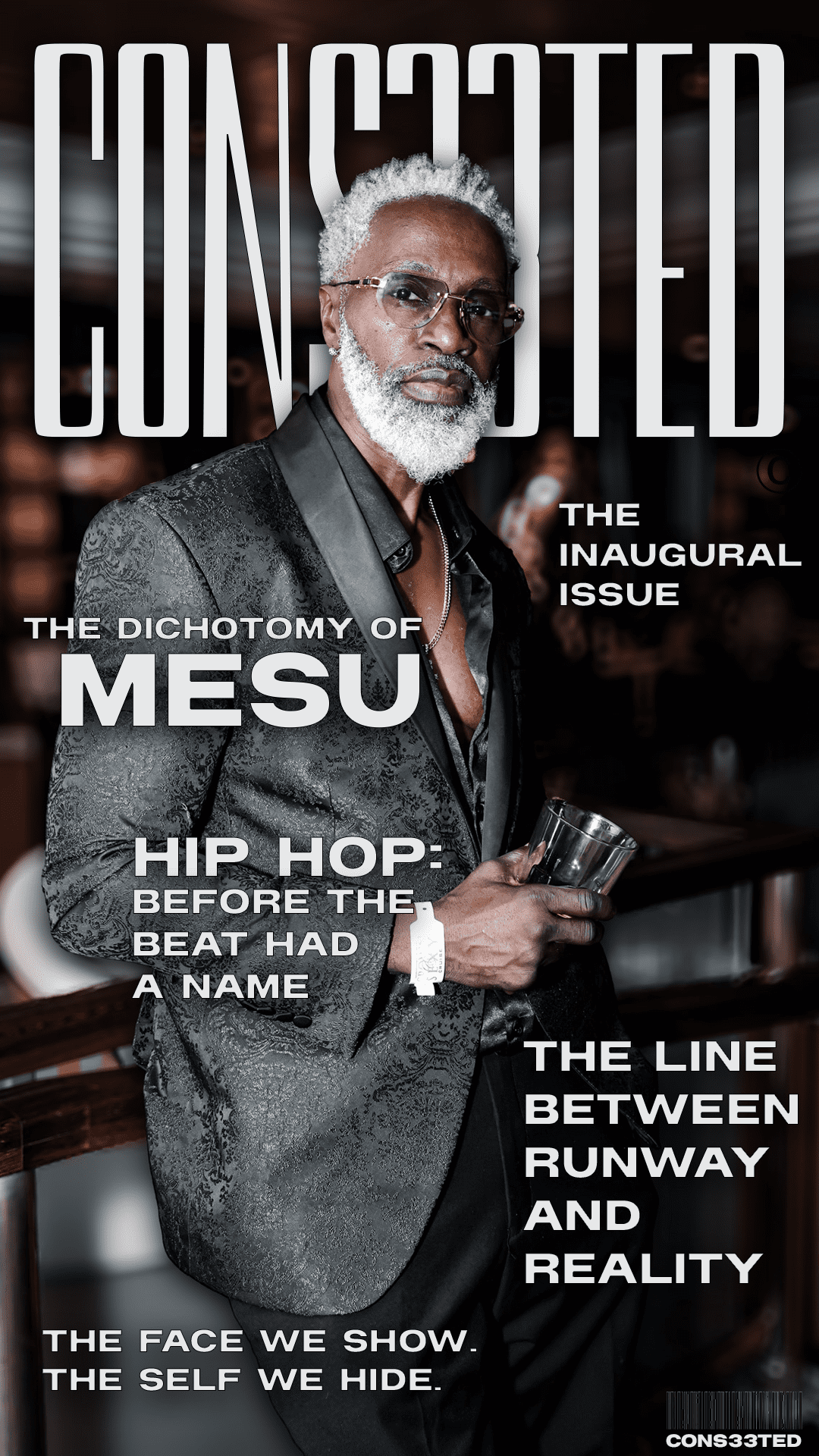
THE DICHOTOMY OF MESU
I’ve spent the better part of my life looking through a viewfinder. As a photographer, I’ve captured thousands of faces, performers under neon lights, crowds at a fever pitch, and strangers in quiet moments. Over the years, I started doing something specific: I began setting aside images of people who carried a certain “blueprint.” It wasn’t about how they looked, but how they stood. I was collecting evidence of real confidence.
But for a long time, those photos just sat there. They were beautiful, but they were silent.
To understand why I finally had to give them a voice, you have to understand where I’m coming from. Growing up neurodivergent isn’t just “being different.” It’s an uphill battle for clarity. For me, finding my own identity felt like trying to hear a pin drop while standing next to a railroad track. The world is a cargo train, 24/7/365, metal grinding on metal, screaming at you to be anyone but yourself.
When I looked at those photographs and then looked at the world, I saw a massive disconnect. I saw people, both with neurodivergence and without who were drowning in insecurity because they had bought into a lie. They had confused Confidence with Arrogance.
CONS33TED is my play on that misconception. Arrogance is a mask for fear; it’s loud because it’s empty. Confidence is a centeredness; it’s quiet because it’s whole.
I’m a writer, a psychology nut, and a perpetual explorer of the “Why” and the “How.” I didn’t want to just make a magazine that looked good on a coffee table. I wanted to build a bridge for the person still looking for themselves. I wanted to take the inspiration I saw in my subjects and turn it into a survival guide for the reader.
For our inaugural issue, I went through my archives and one man stood out: Mesu. I reached out to him because his energy is architecture in motion. I told him that for this to work, we had to go deep. We didn’t need surface-level takes. We needed the truth about the struggle, the triumph, and the inner work.
Inside this issue, you’ll find “The Dichotomy of Mesu.” It’s an exploration of how a man builds a foundation out of faith, survives the statistics of his environment, and learns to sit “upright on his square.”
This publication is for the ones who are tired of the noise. It’s for the ones trying to hear that “pin drop” in their own lives. We aren’t here to tell you who to be, we’re here to show you that being yourself is the only flex that actually matters.
Welcome to CONS33TED. Let’s set the tone.
~ Burt “Time2Killit” Brage, Editor-In-Chief
THE FEATURES
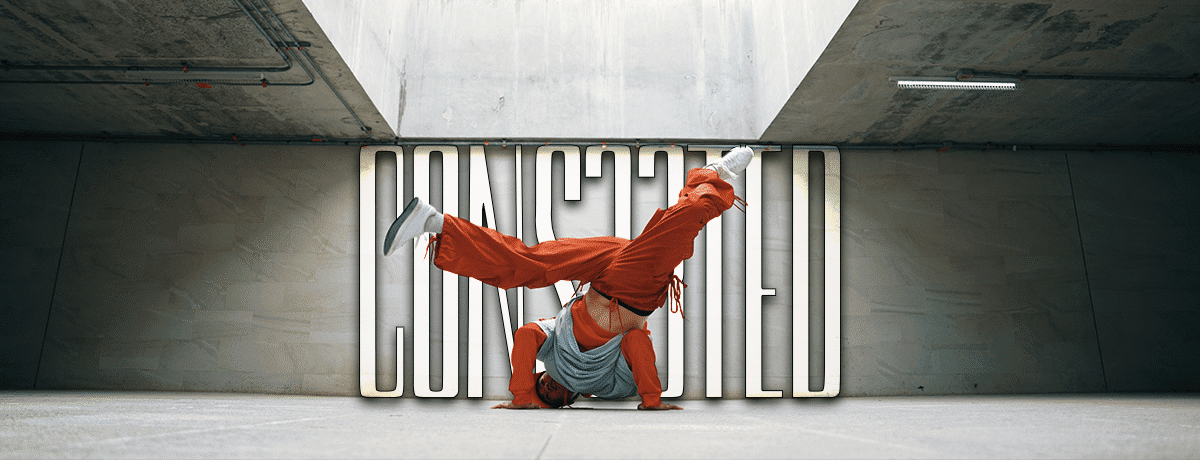
HIP HOP: BEFORE THE BEAT HAD A NAME
This isn’t a tribute to a genre; it’s a study of a survival instinct. Long before there were record deals or global charts, Hip Hop was an action. It was a rhythmic response to being invisible in a world that refused to see you.
- The Thesis: It was movement before melody.
- The Journey: We trace the roots from the concrete up, how a culture became the heartbeat of generations, not as an act of nostalgia, but as a living history that still echoes in how we walk today.
THE LINE BETWEEN RUNWAY AND REALITY
Fashion thrives on the “everyman” while simultaneously pretending we don’t belong in the room. This is a pro-truth exploration of the chasm between the fantasy sold on the catwalk and the compromise sold in the stores. We explore the brilliance, the absurdity, and the disconnect of being expected to buy into an image that was never built for you.
THE FACE WE SHOW. THE SELF WE HIDE.
Living with a comorbidity sharpens your perspective; you begin to notice the “split” in others. This piece is a psychological autopsy of the masks we wear.
- The Version for Survival. * The Version for Safety. Most people are exhausted because they are playing multiple characters. We break down where that split begins and why reclaiming the “hidden self” is the ultimate act of confidence.
THE DICHOTOMY OF MESU
The Inaugural Cover Story
Photographed, Designed, and Written by Burt “Time2Killit” Brage
1. THE FOUNDATION: THE MENTAL ARCHITECTURE
CONS33TED: When you look in the mirror today and see the man looking back at you, what do you feel the most visceral sense of pride in?
MESU: It’s the survival, but not just the physical kind. When I look in the mirror, I see a man who has reached this seasoned age coming from a neighborhood where the statistics were stacked against us. A lot of my childhood friends, people I stood on the corner with, they didn’t make it. They are either gone or stuck. My pride comes from the fact that I made it out mentally.
That foundation was poured by my mother, Rest in Power. She was the architect. She took us to church every Sunday, instilling a sense of structure. But then I went to John Jay College and jumped into student government and various organizations. It was the bridge between the pews of the church and the halls of academia where I learned my greatest tool: the ability to question everything. That curiosity, that refusal to take the world at face value, is what forged the man I am today.
2. THE BIRTH OF CONFIDENCE: BEYOND THE BUZZWORD
CONS33TED: Many people think confidence is something you’re born with, or something you “fake until you make.” Did yours arrive all at once, or was it a slow burn?
MESU: It was a slow birth. My confidence really began to breathe in college. I found myself surrounded by likeminded individuals who rejected the standard narratives. We saw the “jocks” getting all the attention and we said, “No, we’re going to create our own lane.” We started the Love Crew. It was about carving out a space where we were the standard.
But real confidence? That came when I stopped trying to perform for an audience. Once I stopped trying to impress people and started showing up as myself; flaws, scars, and all; life got easier. Experience sharpened me. I realized that at the end of the day, I had to trust my own footing. Confidence is simply the result of living long enough to understand who you are when the lights go out.
CONS33TED: You’ve mentioned that confidence is more than just “swag.” How do you define it at its core?
MESU: It’s spiritual. To be confident is to be in tune with your chakras, your power, and your identity. It’s a centeredness. When you know who you are on a soul level, you don’t have to lean or slouch to fit in. You sit upright on your square.
3. THE AESTHETIC: STYLE AS INTENTION
CONS33TED: Your style has a specific language. How did you build a look that feels so distinct from the “trends” we see on social media?
MESU: I didn’t follow a look; I shaped it. My style has character because it has intention. It’s a symphony, the break of the trouser, the fit of the jacket, the way I wear my hair, my stride, even the way I pause in a conversation. They all speak the same dialect.
Early on, my favorite big cousin was the influence. He was the epitome of tailored. He’d buy me tailor-made pants and take me down to Delancey Street to show me the ropes. I followed his lead, but I realized quickly that the clothes were only half the battle. The other half is the “Swag,” that innate attitude. Without the spirit, the suit is just fabric.
CONS33TED: What is the most common “miss” you see when it comes to modern men and their style?
MESU: The biggest mistake is thinking that every outfit is for everyone. Men see a trend and try to force themselves into it. I’ve tried things on that looked great on the rack, but I didn’t like the way I felt in them. If a garment doesn’t capture my essence, I won’t buy it. You have to let the clothes be an extension of you, not a costume you’re hiding behind.
4. THE INNER WORK: THE SOUND OF SILENCE
CONS33TED: When the world gets loud and life hits hard, where do you retreat to find your equilibrium?
MESU: I rely on the inner work. I rely on meditation. There is a profound difference between the two ways we communicate with the divine: Prayer is when you talk; Meditation is when you listen. When things get heavy, I stop talking. I sit. I listen to that inner voice. That’s where the answers are.
5. THE PRESENCE: ENERGY OVER EGO
CONS33TED: You have a commanding presence. When you walk into a room, what is the specific energy you want to leave behind?
MESU: I want people to feel my energy and instantly know that I am as humble as they come. I want them to see “Knowledge of Self.” People often mistake presence for ego, but they are opposites. A big ego is loud because it’s insecure. Presence is quiet because it’s certain.
I love to travel and meet new people, but I am equally an introvert. I can spend an entire weekend at home, protected in my peace, watching TV and studying my glorious history. That balance, knowing the world but knowing yourself better, is what creates presence.
6. THE SOFTENING: LOSS AND LEGACY
CONS33TED: We talk a lot about “strength,” but what was the moment that truly softened you?
MESU: Losing my Beloved Queen. My mother. She was my rock, my foundation, my everything. Losing her humbled me in a way I can’t put into words. I lost my father, too, and that was a deep pain, but there is something unmatched about the loss of a mother. It changes the way you see the world. It strips away the trivial things and leaves you with what’s real.
7. THE DEFINITION: THE NEW MANHOOD
CONS33TED: How do you define manhood in a world that seems to be struggling to figure out what that word even means anymore?
MESU: Manhood isn’t defined by the size of your bank account or the strength of your muscles. It’s defined by integrity. It’s about keeping your word when it’s inconvenient. It’s about standing up for others who can’t stand for themselves. It’s about the person you are when no one is watching. It’s responsibility, it’s the courage to make the hard call, and it’s the instinct to protect.
CONS33TED: If you could mandate one lesson for men today, something they aren’t being taught in school or by the culture, what would it be?
MESU: To honor and respect women; to worship them in a sense. Men need to look at the Woman symbolically as the Creator. She is the one who gives life; she is the living proof that Man comes from Woman. When you understand that origin story, it changes how you move. It removes the aggression and replaces it with reverence.
8. THE RIPPLE EFFECT: THE FINAL WORD
CONS33TED: At the end of the day, when the magazine is closed and the lights are off, what do you want your contribution to be?
MESU: I want to help people see the sacred in the ordinary moments. I want to inspire patience in a world that is too fast, and compassion in a world that is too cold. Ultimately, I hope to leave a ripple of grace and peace. I want anyone I’ve touched to walk away carrying just a little more light in their own walk of life.